Monday, December 22, 2008

It takes a village, and that’s where I’m Going

On Friay I was officially sword in as a Peace Corps Volunteer, and I have to say, it feels pretty good. I couldn’t help but get sentimental, because I’ve been wanting this for so long, and I’m finally here! The ceremony was great—the Ambassador came, the Country Director came, my host parents came, and the food was incredible.

But there’s still plenty to do before I leave! We just finished 6 days of training with our counterparts, our supervisors and collaborators in our villages for the next three years. It was difficult, and certainly very awkward (especially knowing as little French as I do…). It wasn’t hard for me just because the first question my counterpart asked in front of the group was “So WHY are there so many women here?”; it wasn’t just because he asked me why I didn’t have kids and why I didn’t want any (at my age here I should have at least 1 kid); but it was primarily because I felt so incapacitated to express myself and to make ad adequate and accurate impression of my counterpart. If he was as sexist as his comment appeared to me, then how could I stand up to myself alone in a village with a very limited capacity in French? It’s difficult to describe the thoughts and feelings that ran through me when this realization struck me—like an angry hopelessness. But the more time I spent with my counterpart, the more I realized he is (and I say this with great pleasure) shy and socially awkward. I learned over time that my counterpart is actually one of the more mild mannered counterparts in the bunch. I realize now that this situation is just as new to him as it is to me, and this is a transition we need to make together. Many of the counterparts (most are men) dominated discussions and activities, and many of the women volunteers (myself included) felt repressed, ignored, and completely unequal. In the states, if someone ever questioned my role as a woman, I wouldn't hestitate to stand up for myself with complete confidence. But here, with people who have lived with very different cultures, traditions, norms and practices, and with a very basic elementary capacity for French, it has been incredibly challenging and emotional being unable to express myself and my entitlement to respect. I can only hope I can overcome this challenge and bring understanding to my village about the role of women and their need for respect and equality.

That being said, I have learned many exciting things about my village. I live in the Chiefs compound, near the CSPS (the health clinic) the ecole (village school), and right across from a field of sugar cane. There is a very small marche (market) in my village, but only 500 m from my house is another village which has a massive marche, selling everything I need according to my counterpart. There’s plenty of mango, papaya, guava, palm wine, and a variety of fruit and veggies to eat. I CAN definitely get a dog. There is a waterfall 1K away from my village. EVERYONE speaks Jula, not French (except for my counterpart, who doesn’t speak Jula…so we’ll be learning together). And, more importantly, I’ve learned of some of the serious health issues that face my village—malnutrition, palu (malaria), STIs, and domicile births. I also know that, even though I am heading out to my village on the 26th, I won’t be reaching my village until the 29th, enabling me to buy plenty of things to furnish my house.

So it may be a little while until I update, but I will try my hardest to let you know how my first couple weeks go! I hope everyone has a fantastic holiday season and a fantastic season. I’ll be thinking about you all!

And, as I know I’ve promised many a time, here are some pictures of some things I’ve seen in my past two months:


Me in Sissamba with a large group of kids following behind me :)


Doing a Malnutrition and Bouille (nutrient enriched porridge) session with Sissambans in the Marche


Weighing and measuring babies at the CSPS

Some of my kids in front of my house in Sissamba

My room in Sissamba


My latrine in Sissamba...

Prayer in Sissamba suring Tebaski


My Host Fam and kids in Sissamba! Id list theyre names from left to right, but I dont know them all...


A Burkina sunset


With some of the kids during my last night with the host fam!

Me and some of other PCVs during Swear In (all their dresses are tailored made for only 8 bucks!)


Friday, November 21, 2008

When I grow up, I want to be a Burkinabe Woman

I could have made this post all about my site placement (which I got last week and will share at the end of this post), but I’d really like to talk about the Burkinabe woman. She is a powerhouse. Most in village, I’d say, are bigger than the men—bigger hands and arms (flashback to Seinfeld anyone?), broader shoulders, tall stature. And my God, I can see why! Her day starts somewhere between 4 and 5, when she’ll begin sweeping the compound, pounding millet, washing her children and feeding her husband. All afternoon she’ll spend working—in the fields, pounding more millet, preparing foods, washing clothes of a family of 15, carrying ridiculous amounts of large, heavy objects on her head over long distances…typically doing all of this WHILE carrying and tending to at least one small infant child (also, sometimes, while riding a bike….I’ll remember to take pictures next time). At night she’ll wash her children, cook for her children and husband, and do all the dishes. She is the nurturer, the disciplinarian, the provider, the brawn, the farmer, the seamstress. Her breasts have endured over 10 years of constant breast feeding…and don’t even get me started on how she must be feeling after birthing 10+ children! Day in day out the Burkinabe woman does this, and as tired as she looks at the end of the day—staggering across the compound with eyes half-closed—she gets up and does it all over again.

Now, I’m not trying to say here that I want to do all these things when I grow up. What I’m trying to say here is, these women are freaking strong in every single sense of the word. Drop them off in the middle of nowhere and they could build an entire village if they had do. The men really better watch out, because if they ever piss off their wives enough, they are in for a world of pain and suffering. Because I highly (I emphasize, HIGHLY) doubt that a man here would be able to feed himself or care for himself or his children the way the women here do. During the day in village, I typically see the men in their typical gather places, shooting the shit, praying, whatever, while their wives are sustaining the welfare of the family. I’m not trying to bash the men here either—that’s just how it is culturally here. I think by the end of my time here, I will be just as blown away by these women as I am today. Incredible.

So my site! BF PC staff displayed a huge map of Burkina and had two boxes full of slips of paper—one for Health volunteers and one for SED volunteers. Someone would read a description of a site from either box while the rest of the PCTs would guess who would be living and serving there for the next two years. With each site, I’d shake in anticipation. But once it was all over, I felt so incredibly relieved and excited. So here it is:

Site: I emailed it to you, so I don’t think I’ll make it public on my blog for security reasons. If you don’t have it, let me know and I’ll send it to you!
Population: 2500
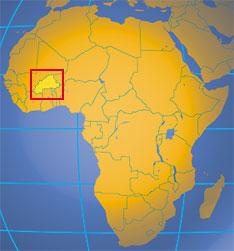
Location: South! Only 20K from Banfora, known for their beautiful cascading waterfalls—a big tourist site in BF. My site is actually in the BF tourism book for waterfalls as well. My village is also 60 K from Bobo, the second largest city in BF and a beautiful city (from the 2 hours I’ve spent in it…)
Perks: My house is HUGE according to my APCD. It has 5 rooms and an indoor shower. Its located in the chief’s compound, but has its own private latrine and courtyard. So I’ll have privacy and protection! I have no idea if there is a market in my village, but there is cell phone reception and a strong sense of community according to my APCD.

This is a first generation site, which means I am the first volunteer here. This has its perks and challenges. I see it right now as building the foundation for future volunteers—which will be very challenging. For a village to get used to a ‘nasara’ in their village could take an entire two years. But, I have the opportunity to make a positive first impression on a community and set the bar high for future volunteers. I know its going to be the most challenging job I’ve ever had to do, but I know its going to be such an incredible experience!

My mailing address will be changing in the next month—to what I don’t know…but when I find out I will certainly make sure to let you know! I’ve already gotten some letters, packages, and padded envelopes from friends and family (shout-out to the bro for sending me a post card all the way from China!!)—so thank you, thank you so much. I didn’t realize how special it would mean to me until I came here.

Friday, November 7, 2008

No GI Problems AND a Shout out from Obama? Its been a good week

Currently sitting in the PC Transit house in Ouaga, spending a weekend here with the other Health PCTs. I just ate cheese pizza and ice cream for lunch--my first since coming here. Earlier this week, I was crowded around a small television in Ouahigouya at 5:00 am, listening to Obama's acceptance speech through the French dubbed translation. I'm pretty content right now.

Thought I'd post a little update on life in Burkina, since I haven't quite painted a picture of that yet. Here it goes...

Its hard to detail the past 3 weeks that I've been here because so much has happened. And while its gone by so fast, I feel like I've been here forever.

So what can I say about Burkina Faso? I'd start by talking about the few cities and villages I've been too, but I think its important to talk about how a Burkinabe city is significantly , than an American city. In Ouagadougou for example, Burkina's capital, most of the roads are paved. Some of them are dirt. As a matter of fact, everything is covered in dirt. There are cement buildings along some of the more touristy parts of the city, and if they're not grocery stores, post offices, cinemas or higher end stores, the, they're fancy hotels that Westerns mainly reside. The smaller the shops, the marche (market), the boutiques (small grocery/convenient stores, hair salons—a lot of things in the non touristy areas are made of mud (maybe some cement) and wood with a tin roof. My initial reaction was that they looked like shanty towns—and to an American I guess they are. But the more time I've spent here the more I've realized that that's all you really need. Cities have electricity. Its not necessarily in the residential areas, and if it is, its not necessarily reliable. So why go to such extreme measures and expenses to build a house that, practically speaking, won't stay cool and well lit when the sun goes down?

So that's Ouaga, and Ouahigoya is essentially the same but with fewer paved roads, less fancy hotels and buildings, and less reliable electricity. I'm definitely not complaining though—I think it has just enough to challenge and reward me. Yeah its hot and dusty and sweating all day and all night (literally dripping with sweat while I'm sleeping because its an oven in my room), but I can always a nice cold bissap (a plastic bag frozen with tea made from a Burkina flower…tastes like passion tea!) for about 75 cents, enjoy some brochett or chicken in a bag (skewered meat, and yes I think its glorious) and a cold Burkina beer with friends, or take a trip to a fancy Western hotel and pay 2 bucks to go into the pool.

For the past two weeks I've been living with my host family in Sissamba, which is a small village 10 K from Ouahigouya. There no electricity in Sissamba. There are at least two generators in the village—one to power the discotheque in Sissamba and one to charge cell phones at the boutique which also charges the "cinema" (i.e. a 12 inch tv in a courtyard that plays old American action movies dubbed in French). After training, I come home with only an hour or two of sunlight and for the remainder of the night I spent with a headlamp strapped around my forehead, a flashlight in my hand and an oil lamp in my room. My room is one of many in my family's compound. Its made of cement all around, sans the tin roof and tin and wood door. Its one big room and one small room; the small room is just for storage, and my large room is for everything else. I have a bed and mosquito net, two tables, a water filter and a trunk to hold valuables. Next to my room is my latrine and shower area—its essentially two cubicles made of cement….one with a hole in the ground for, well, you know, and the other with a small drain for bucket baths. You'd think it would be hard to get used that kind of set up, but I honestly don't mind it. Its actually very therapeutic to be able to bathe under the stars!

My host family is wonderful. There's my host dad, two host moms (though only one cooks my food and hangs out with me) and around 10-14 children (I don't know all of their names…and as far as I know there could me more of them). My host dad is the only one fluent in French, but the rest know some French and are fluent in Moore. They're all great, though it can be overwhelming to have them all surrounding me whenever I'm home. Its difficult to communicate, but I find it easiest to get along with the kids. I've played ware (which is called Mancala in the US but has a completely different set of rules in Burkina) with every child and adult in the compound (including topless women…which is pretty common. And no, I have no intention to participate in that cultural norm...). Most mornings I'll walk my bike about a mile to the village health center (where we meet for training, and where we often meet to begin our 10 K bike ride into Ouahigouya at 630am), and I'll walk with a couple of my kids and greet neighbors along the way. One time, every child a passed decided to follow me, and I got to the health center with 26 kids trailing behind me! I have felt only kindness and warmth from Sissamba people (aside from their jokes about me and scorpions…). After mentioning that there was a discotheque, you may have wondered whether I have attended. Answer: I have, but I am very reluctant to go again. I went with about 7 other kids in my family…all under 13 I would say. Once I got there, I was surrounded by a large circle of kids—none of them dancing. There was music playing and they all seemed to be waiting around for something, so I thought why not start the dance party?? So I do some pretty basic dance moves, using my hips, nothing too crazy. And I think that, if I point at them and tell them to come over, they'd start dancing too and they'd quickly forget that I wasn't one of them. I was wrong. They not only continued to stare at me, but they actually hid from me! So if I didn't stand out before I started dancing in a circle of 30 kids, I certainly did afterwards. Even Colin, another PCT who happened to be at the dance was embarrassed by me! So perhaps I'm just not cool enough for the Sissamban discotheque.

The only other thing I can thinking about mentioning is the food. Other than being ridiculously carb-heavy, its pretty good. In village I'll have either rice or spaghetti dish with some sort of sauce for dinner and bread for breakfast. And gato (fried bread which tastes like donuts without the sugar) is glorious and copius. Two nights I was fortunate enough to get salad, but I haven't had any fruit in village. In Ouahigoya, I can get the usual rice or spaghetti, but I have a lot more options. They have yoghurt here which is different than in the states, but very good. There are always stands selling oranges and bananas. There are omlette sandwhiches, some fruits and veggies (cucumber, tomato, onion, lettuce, banana, guava, watermelon and apples), peanut butter, incredible chicken dinners, brochettes, fish, really good frozen lemonade in a bag—I haven't eaten anything that I haven't been willing to have again. Burkina is definitely lacking some critical food items though, like cheese (I just had my first cheese...one a cheese pizza here in Ouaga), chocolate (can get it, but its rare), granola, milk (here but hard to come by). Some PCTs have gotten sick, whether its because of poorly made food (people don't wash their hands with soap here…so giardia and a whole lot of other parasites are common) or because they're dehydrated, I'm not sure. Burkina was ranked the 3rd worst for GI problems in PC Africa last year (and was ranked 1st for the previous two years), so something is definitely going on. I'm one of the lucky ones who has been just fine so far! I wouldn't be surprised if I'll gain weight...I'm an eating fiend here (example: ate an entire bowl over filled with spaghetti...and then finished what was left on my friend's plate!)

Sunday, November 2, 2008

The Good News Is, I'm Still Alive

The bad news is, I didn’t think I would be last Monday. Our first Sunday in Burkina was spent in village to be formally adopted into host families. The SED volunteers stayed in Ouahigouya, and the Health volunteers were split up into 3 different villages no more than 10K from Ouahigouya. I, a long with 4 other volunteers, am now a resident of Sissamba. I’m living with my host dad, his two wives, and many many kids (unsure which ones belong to my host family and which ones belong to others in the compound. Note that I said compound, not house. Its not a house with rooms, but rather a compound compose of many small buildings. My ‘room’ is a building at the far corner of the compound: it is spacious with two rooms, and is furnished with a twin bed and mosquito net, two small tables, a foot locker of sorts, and a water filter. I have my own “shower” area for bucket baths and my own latrine

Its Burkinabe custom to shower atleast twice a day: once in the morning before breakfast and once in the evening before dinner—it is unacceptable to eat and talk with people until you bathe. Once I bathe, I typically eat breakfast (bread and some glorious Nescafe instant coffee) with my main host mom, and I’ll eat dinner with my host dad outside with all his kids sitting and staring.

Day one went relatively well.

Day two, however, went a bit differently.

After a day of language and health training, I took a bucket bath (which is actually very nice to take outside when the temperature begins to go down and the stars come out), wrapped myself in a pana (a large cloth), and headed into my room. I have two doors—a screen door and an aluminum door. Instead of closing the aluminum door, I thought it would be best to pull a curtain over my door to change. Immediately after touching the curtain, I felt a sharp sting on my finger. It felt like nothing I have ever felt before. I figured it must have been a spider or something, but the sun was down and I didn’t have enough lighting in my room (composed of lanterns and flashlights) to make out what had happened. I was feeling a little tense, being near to naked, blind in darkness, and trying to find out what had happened and where my clothes were. Once I threw some clothes on, I rushed to my med packet and French/English dictionary. Being completely ignorant of French, I found my host father, pointed to the word for “sting” in French, and pointed to a picture of a bug I had found in my med book. My host dad came into my room and looked around the corner nearest the curtain I had touched to find a scorpion.

So I begin to panic.

I pick up a list of important PC Burkina numbers and point to the medical number and find the word for “help” in French (its “aide” for anyone who is in a sticky situation like I was). But naturally, being in the rural village that is Sissamba with the only existent electricity coming from generators, my host father’s cell phone did not have reception in the compound—he had to travel about a mile away to make the call.

So I stay by the entrance of my room, at this point now surrounded by atleast 20 adults and children. I tell myself I’m not going to panic, I’m not going to cry, that everything will be alright. But time is passing slowly. One of my host brothers speaks French, so I begin to ask him questions, like “are scorpions poisonous?” and “are scorpions fatal?” Over and over a again my host brother said “Oui, oui.”

So I start to freak out. A lot.

The ugly cry comes out. I’m shaking. I feel weak. I need to sit down. The intense stinging and burning sensation spreads down my thumb.

And all I can think about at this moment is that I’m surrounded by people who barely speak French. I barely speak French. And I’m slowly dying in the middle of nowhere with no one who can understand me.

You learn French a lot faster when you’re in an urgent situation. I formed sentences like “when is my host dad returning?”, “will he be returning soon?”, and my personal favorite “I would not like to die!” The crying is uncontrollable at this point, and instead of helping comfort me or rubbing my back, I am just getting stared at by atleast 30 people at this point.
As I begin to seriously consider writing a goodbye letter, my host father pulls up on a motorcycle with my Language Teacher, a native Burkinabe woman. She tells me (in English) that the scorpions here in Burkina are not deadly. I’m relieved, to say the least, but would still like someone from the medical staff to verify. So a call is made, and within 20 minutes a PC van pulls right up to my door. The staff that showed up told me to pack a bag because I will be staying in Ouahigouya for the night. I’m rushed out of Sissamba on uneven dirt roads and taken to the PC medical office in Ouahigouya, where I’m given ample amounts of Benadryl and Ibuprofen.
Despite the poor cell phone reception in Sissamba, word still manages to travel fast. That next morning, fellow Sissamba volunteers were told of my unfortunate night by their host families…and for the rest of that week I have been approached by strangers asking how my scorpion bite is. I’m even called Nanga (meaning scorpion in Moore) by one of the host families. I’m trying to convince myself that this is all endearing and not mockery.

On the plus side (other than surviving, of course), is that I’m the first volunteer to have a crazy PC experience in our group, and my new nickname is the Scorpion Queen. I wouldn’t wish this experience on anyone, as its has by far been the most alarming experience of my life—thinking I would die in a Podunk village in Burkina Faso surrounded by no one who understood me and far far away from loved ones. But now that over a week has past, I’ve become pretty proud of myself to know that my eagerness and happiness here has grown exponentially despite such a traumatic event.

Diving in Head First


This is a post I wrote some time ago but never had a chance to post. Enjoy!

My experience so far with Peace Corps and Burkina has felt just like diving into a deep pool of water. At first, you feel the rush as your body enters. Then, you become overwhelmed, disoriented, unsure where you are in relation to the water’s surface; but once you’ve attained your bearings, you do everything you can to reach air.
After an incredibly quick staging session, 30 other PCTs and I (in either the Health or Small Enterprise Development programs) trekked from the Philly airport, to De Gaulle in Paris, and waited in De Gaulle for 8 hours before the 6 hour plane ride into Ouagadougou. With only 3 hours of sleep in our last night in Philly, I went 36 hours straight without more than 30 min total of shut eye.
The Ouaga airport is incredibly small. After claiming all of our baggage, the PCTs and I met up with some Burkina PC staff and got into PC vans to head to Hotel Excellence in Ouaga. I wanted to postpone any sort of judgment of the country until I had a full day to experience Burkina. It was difficult though, as one of the first things I saw out my vans window was a tall, dark, bearded man with unblinking, glazed eyes staring right at me, unsheathing what looked like massive samari sword. The ride to Hotel Excellence, the shanty towns we passed along the way, and our entrance into a beautiful hotel were completely overpowered by this overwhelming ‘holy shit what am I doing’ sentiment.
Every day since my first night has been nothing short of incredible though (granted, I guess there are many, many things better than a scary man with a sharp sword…). We arrived Wednesday night. Thursday we took care of some basic business (IDs, bike fittings, Language proficiency test, overview of what to expect, etc), headed to the Country Director’s (a great man) house for an incredible lunch, and then off to Ouahigouya, the PCT training site. We have been staying in 2-4 person rooms with electricity, a bug net and beds, and a bathroom (toilet, sink and shower all in one….but no door….). My adjustment to such a drastically different country thus far has been surprising. After my first night I’ve just taken things as they come. Ouahigouya is one of the larger cities in the north. It only has two paved roads. The rest are dirt. All houses I have seen have been made of mud or concrete (very small) with tin or thatched roofs. There’s trash, wild dogs, goats, donkeys, and people on mopeds and bikes all over the roads. I’ve already seen men and women carry baskets and boxes my size on their heads (sometimes, while biking and with a baby on their back!). The begins to rise at around 430 or 5, and begins to set at around 630. When its dark, its dark. No street lights, no flashlights, and yet everyone manages to hang out and see what they’re doing.
I got 3 shots today, 4 in the past 3 days, and will have probably another 3 or 4 before stag (training) is over. Training days will typically begin at around 8 and end at around 5, filled with language, cultural, and technical training. I (expectedly) scored Novice Low on the French exam (the lowest level…) so I will also be attending tutor sessions from 720-750 am and from 515-545 pm. So it’s a long day! We’re currently staying at our training site, but coming Sunday we will be meeting our host families and staying in a village nearby, where we will be eating, sleeping, and socializing with our Burkinabe host families, and biking to training every day.
I certainly wouldn’t say that I think these next 9 weeks will go smashingly. As a matter of fact, I know I will have a rough time. But so far I’ve been incredibly pleased with my patience and acceptance of the challenges and struggles that have thus far come from being in the second poorest country in the world. I know this will be difficult, but I am becoming more and more confident in the direction I am going. Two years does seem quite daunting right now, but I know the more I learn the more ready I’ll be. I’ve only been in Burkina for 48 hours and I can say with confidence that I know there is so much I will love here. Last night was our welcoming party. There was traditional music, dancing, and drinking, and I actually had quite the moment when we were greeted with open arms, drum playing, fresh water, and smiles from some of the locals. It was so touching, and I know that the rewards of my stay and work here will far surpass the struggles. You cannot find direction until you get a little lost and overwhelmed first.
In other news, the food I’ve had here thus far has been fantastic! Spaghetti, couscous with tomato stew-ish sauce, rice with peanut sauce, brushett (meet kabob with garlic and vegitables), Burkina beer—its all been surprisingly appetizing. No crazy bowel problems. Yet. Can’t drink the water. Will get a Burkinabe dress tailored for myself quite soon because they’re beautiful. Stag group is amazing, have already made what I can tell will be lifelong friends in the past 3 days.

Monday, September 29, 2008

As the Wise Gentlemen of Whitesnake Once said, "Here I Go Again On My Own"

With just about two weeks left (16 days, but who’s counting…) before taking flight to what will seem like an entirely different world, I have had to say a lot of good byes. Most of the time, the emotions that come with good byes hit me immediately after I say them and stay with me for days; other times, these emotions come before the good bye even takes place. I’ve had to bid farewells before , but nothing has been this emotionally draining and saddening as this. And it’s like this for a number of reasons: I’ll be in a third world country, void of so many familiarities yet chock full of sensory overloads and challenging situations, and it will be much more difficult to stay in touch with loved ones at home. But I think the most substantial reason for such overpowering feelings of grief is that I’m leaving a lot of meaningful people—the most meaningful people I have ever had in my life. It’s just as much a sentiment of loss as it is a sentiment of sadness. I have felt in the past few weeks that I am sacrificing friendships and close relationships by making this move in my life. And it causes such dissonance, wanting to jump head first into this new adventure that awaits me while emotionally beating myself up over the thought of potentially losing those who are dearest to me now. Relationships have always been of utmost importance, and yet with every good bye I have to wonder whether it’s worth leaving behind. And it scares me. It scares me that I'm leaving something that I can never have with that person again.

After a lot of reflection and talks with close friends, I see now that—no matter where I ended up after college—similar thoughts and feelings would follow. I was so used to being surrounded by loved ones in the past four years, whether at home or at college, that I failed to realize we’re all going through some serious changes right now. I have friends all along the east coast, west coast, mid-west, Europe, Africa, Asia—and no matter where we end up we have no choice but to deal with feelings of separation and disconnectedness. That’s part of the real world; I guess I was a bit too naïve and oblivious to realize it until it whacked me upside the head.

And part of existing in the real world—for me at least—is to maintain connectedness in spite of such great distances. People change, jobs change, location changes, but relationships can still be embraced despite these changes.

We’re all walking along a “lonely street of dreams.” We just need a little wifi and some cell reception every now and then.

Wednesday, September 3, 2008

Thank You! Or Should I Say, ' Merci ! '

Since contacting friends and loved ones, I have gotten an abundance of love and encouragement in return--and I am so grateful and honored to have such supportive people in my life. Since accepting my invitation, I have already began to feel alone knowing that I will be so distant and isolated from the people who have been near and dear to me. But reading your messages, emails, and talking with you has helped me realize that distance cannot destroy that closeness. So merci boucoup!

Another reason I am feeling rather thankful is this: about two weeks ago, I heard of many Peace Corps nominees (many of which were nominated for the same time frame as me) were sent an email. In a nutshell, this email said "Hey! So, uhh, ya know how we nominated you for September? Well, that's not gonna work out. And we only invite about 300 people between October and December, so you'll be considered for programs between January and June of 2009." 2009?! Really?! I nearly fell out of my chair reading about this, because I'm sure I would have received that same email had I not been persistent with my Placement Officer. I feel terrible for those who have to wait that long. I also feel terrible for Peace Corps, because the ONLY reason that email (while not exactly the most tasteful of emails) was because of budget cuts. Every year, more people apply to Peace Corps; and in the past several years, Peace Corps has had to make more and more program cuts, causing greater competition and a greater number of qualified, committed people turned down. I hope everyone who received that email gets placed next year, and I'm feeling even MORE grateful for having a timely placement!

So in the past several weeks I've been teaching myself French (can't you tell?!), studying for the GREs which I'm taking on Thursday (and which my success seems more like a shot in the dark than a measure of skill or intelligence), and starting to gear up for Burkina living conditions.
I've already bought: a pack (one of those big backpacks you typically see people take when they go backpacking through Europe), some conservative dress clothes (Despite the ridiculously hot temperatures and abundance of dust in Burkina Faso, the Burkinabe people place a great deal of emphasis on appropriate dress....that means everything must fall BELOW the knee), a "Bug hut" (I don't know what most Americans consider"hot nights" to be, but in BF it will consist of sleeping OUTSIDE because of ungodly hot temperatures inside...so this tent will protect me from hungry mosquitoes), some shoes, wicking athletic clothes, an ipod shuffle, and I'm currently look into a solar charger for batteries and small electronics. If you're interested in checking out a suggested packing list for BF, here's the link: http://www.peacecorpswiki.org/Packing_list_for_Burkina_Faso

What's crazy is that I have more than a month to prepare for all this, and yet there is so much left to do. And what's even more overwhelming is that I just want to sit, relax, and enjoy Western life and friends and family. Thinking about it though, I'd rather be under prepared in terms of gear than miss out on chances to spend time with people.